The COVID19 lock down is slowly coming to an end in all Australian states and territories.  Despite this, its impacts may have longer term effects in the realms of family violence in Australia.

During the lockdown, we have experienced increased levels of family violence in homes with more women coming forward to report violence. Recent studies coming out of Monash University in Victoria indicates that the lockdowns, although considered necessary for health, have led to the worsened levels of family violence around Australia. In this study, a survey was taken using information from 166 family violence practitioners across Victoria between April and May 2020. The report found that with families being stuck at home, some women have been left in unbearable circumstances. The report showed that close to 60 percent of legal personnel experienced increased cases of violence against women with evidence suggesting that the violence itself had worsened due to the lock down and that the number of ‘first time’ family violence reports had increased by more than 40 percent during this period. 

During the study, legal practitioners further reported that in many cases, respondents to family violence refused to let women out of the house in order to ‘protect them’ from the virus and some cases included incidents where respondents demanded their partners to wash their hands to the point of bleeding. Many women also reported to their lawyers that Respondents would monitor their use of electronics making it difficult for them to reach out for help.

As lawyers, we all share concerns for the women who are unable to seek face-to-face supports from Police, courts and family violence workers during these difficult times.

The recent research reveals the ugly truth for some of being behind locked doors with their partners for extended periods of time.

Family violence is an issue that must remain at the forefront of our minds. For every month that the lockdown continues, additional women and children will be exposed to the risk of family violence all around Australia.

If you are the victim of domestic and family violence, or alternatively, if the police or someone else has taken out court application against you, call us I immediately on 1300 066 669 or email us at [email protected]

What You Should Know

What is software piracy?

Software piracy is the act of stealing software that is legally protected. Stealing can include selling, distributing, modifying or copying software. It is a world-wide issue with a staggering cost of $43.3 billion dollars lost commercially.

Why is it an issue?

Software piracy is an issue that we should all be aware of- as any one of us can inadvertently become involved in this sort of illegal activity.

Who is a software pirate?

You do not need to be a hacker or experienced coder to be a software pirate. Any person with a computer can fall fowl of these laws if they are not aware of them.

The five main types of software piracy:

  • Softlifting:

This occurs when someone purchases a single use software program and then downloads it many times over, despite the license stating that it should only be downloaded once. This type of breach occurs most often in businesses and schools with the intention of saving money. This form of software piracy is the most common form.

  • Client-server overuse:

This occurs when too many people engage in using a main copy of the program simultaneously. This often occurs when businesses are on a local area network and download the program for all of their staff to use and access. The breach occurs when the licence does not allow for the program to be used multiple times.

  • Hard disk loading:

This is a type of commercial software piracy whereby a legal version of the program is purchased and then it is reproduced, copied or installed into computer hard disks. The person then on-sells the product.

  • Counterfeiting:

This occurs when software programs are illegally duplicated and sold as authentic products. These counterfeited products are often sold at discounted prices in contrast to legitimate software versions.

  • Online piracy:

This is also known as internet piracy. It occurs when illegal software is sold, shared or acquired via the internet.

Legal Consequences

There are significant consequences in relation to software piracy. Whilst the cheaper price associated with pirated software may appear attractive there are serious and expensive legal consequences that need to be considered.

Under the Copyright Act 1968 (Cth) it is an offence to knowingly import, possess, sell, distribute or commercially deal with an infringing copy; sell infringing copies of computer programs; or transmit a computer program to enable it to be copied when received.

The penalties are steep with an individual being liable for up to $117 000, a corporation liable for up to $585 000, and a possible term of imprisonment for up to five years.

Further, to these legal ramifications other significant consequences can be experienced, namely:

  • An increased chance that the software will fail or malfunction
  • No access to ongoing support such as training, upgrades, customer assistance and bug fixes
  • No warranty and no provision for updates to the software
  • The possibility of infecting your PC with malware, viruses or adware
  • A slower PC

What to do if investigated in relation to software piracy.

In the first instance it is important to keep your personal and business interests and your PC protected by only purchasing licensed products from authorized dealers. Moreover, on purchasing the software ensure that you are aware of the terms and conditions and that you agree to and adhere to all of the guidelines. Ensuring you have an authorized and reputable antivirus protection program installed is also prudent.

If you find that you are under investigation for a possible breach of copyright laws it is important that you seek legal advice.

Australian Reporters attacked by U.S. Police after identifying themselves as the media while reporting on White House protesting

Two Channel 7 reporters were live on Sunrise reporting outside the White House on the current protests triggered by the killing of George Floyd, when they were attacked by United States Police officers and the National Guard.

The reporters, Amelia Brace and Tim Myers identified themselves attempted to identify themselves as the media before they were attacked by Police and Guard.

Brace was clubbed with a truncheon and Myers hit with a riot shield which was all captured live. Further footage released shows a third officer attempting to hold back his colleagues and let the journalists go, without the third officer it is unclear how far the attack would have gone.

Brace and Myers have confirmed they are okay just bruised after both being shot with rubber bullets subsequent to teargas was fired at the crowd and their attack.

Brace when later describing the incident stated:

“I actually managed to get a rubber bullet to the backside and Tim got one in the back of the neck so we’ll have a few bruises tomorrow but we’re perfectly safe.”

She went on to say:

“There was really no escape at that moment”…”We had the National Guard behind us and those police coming through so quickly, there was nowhere for us to go, so there was really no choice but to hide in that corner hoping they would pass by.”

The Australian embassy in Washington DC has reached out to the US State Department after the incident. The Australian Ambassador to the United States stated he was “aware of the treatment” inflicted on Brace and Myers.

The US Embassy has since released a statement:

“Freedom of the press is a right Australians and Americans hold dear. We take mistreatment of journalists seriously, as do all who take democracy seriously”.

The United States Freedom Tracker has claimed to have verified and documented more than 100 incidents involving journalists during the current protesting. Including, 20 arrests, 60 assaults with both physical and with ranged weapons, 13 reports of damaged equipment, 9 reports of assaults with damage, 25 others including tear gassing and building damage.

As the protests continue throughout the United States it appears to police and Guard have been the most constant source of danger through the protests, not the protesters themselves.

Prime Minister Scott Morrison has released a statement describing the attack as troubling and has requested a formal investigation. Prime Minister Morrison has since spoken directly to Channel 7 to check on the crew’s welfare and offer the government’s support in pursuing a formal complaint through the Australian embassy.

It is understood that Channel 7 will make a formal complaint.

Further, the Media, Entertainment and Arts Alliance has written to the US ambassador in Canberra to protest the attacks on journalists covering the civil unrest.

It’s been a very unsettling week, particularly in America, but rippling throughout the world. We are in challenging and painful times and we shouldn’t ignore what is happening simply because we live down under in Australia. As a wider community, the protests, the demand for justice and the end of racism should impact us just as deeply as it is those in America.

There is a shift and a change happening. In the midst of this eradication and upheaval where many are calling for justice, there are also many calling for Order with America now deploying their national guard and setting ‘no tolerance’ curfews.

Order and Justice. How do they coincide and which do we favour more?  Which should we care about more?

For those calling for order, how do you say we can have order when the system of justice is ‘out of order’? It is arguable that to call for order without justice is simply to cover a festering wound pretending that, somehow, it will heal and get better when we all know that it won’t. As the human body works, arguably, so do the social constructs surrounding racism. We are infected and action needs to be taken.

On the other hand, there are those calling for justice. Dr Martin Luther King Jr. once said that protest “is the language of the unheard.”  It is the method of those that do not have a voice. Whether some have gone too far, by looting and causing destruction, is an argument shadowing the real issue – a call for justice.

We are currently experiencing 2 pandemics. COVID19 is a new pandemic.  The pandemic of racism is not new at all. For centuries, racism, bigotry and marginalisation has been tolerated and systemised.

It is no longer enough to simply ‘not be racist’. It is time to be actively against racism.

Order is important. But justice is first.

Once we get justice in order, there will be order.

The Queensland Government passed laws in May 2019, expanding the legal definition of murder so that it includes reckless indifference to human life.

The laws were introduced following controversial manslaughter cases in Queensland. Many unlawful child killings in Queensland have previously resulted in the offender being convicted of manslaughter rather than murder.

Why? The main difference between murder and manslaughter is the element of intent. The Prosecution must prove beyond a reasonable doubt, that the offender intended to kill the victim.

The decision of R v Moloney [1985] AC 905 held that the mental element in murder consists of an intention to kill or cause really serious injury – not merely foresight that death or serious injury will be a probable consequence. Therefore, if an unlawful killing occurs and the mental element is not proven, the offender will be guilty of manslaughter, per s 303(1) of the Criminal Code (Qld) 1899.

Hemi Goodwin-Burke was only 18 months old when he was “crushed like a coke can” by his babysitter. However, because intent could not be proven, the murder charge was downgraded to manslaughter. Hemi’s babysitter was sentenced to only eight and a half years imprisonment. He was eligible for parole after serving only 4 years.

Under the expanded definition, “death is caused by an act done, or omission made, with reckless indifference to human life”. An unlawful killing in that circumstance is known as murder by reckless indifference. The new laws mean that intent will no longer need to be proved for murder by reckless indifference and the offender will be facing murder’s mandatory life imprisonment penalty

The first offender charged under this new law was Kerri-Ann Conley. She was charged with two counts of murder after she left her one and two-year-old daughters inside a black station wagon at their home in Logan. Her daughters were declared dead at the scene – cause of death was exposure to extreme heat.

Willow Dunn’s father will be the second offender charged. The allegations emerging of reckless indifference suffered by Willow are too despicable to list.  

Hemi’s parent’s believe the new laws are too long coming for justice to be served on Hemi’s babysitter, however the laws are a step in the right direction for other families who want justice for their vulnerable children.

In a controversial move, Senator Pauline Hanson, the leader of the One Nation party is threatening to take legal action against the Queensland government. Senator Hanson has imposed a deadline of Thursday 28 May 2020 on the Queensland Government to lift the border restrictions or face a constitutional challenge of the closures in the High Court.

The High Court challenge has not yet been filed, however Queensland law firm Mahoneys alongside New South Wales Barrister Guy Reynolds SC are expected to appear on behalf of a group of Queensland residents who have been affected by the ban.

There has been a GoFundMe page set up by Senator Hanson to raise money for the challenge. The page has a goal of raising 1 million dollars, as of midday 27 May 2020 the page has raised close to nine thousand dollars.

The letter was written to the Government requesting to revoke the border ban by 4:00pm Thursday 28 May 2020. The letter goes on to say “If you do not give that undertaking, and you do not otherwise satisfy us that the border ban is valid, we expect to receive instructions to commence proceedings in the High Court of Australia seeking a declaration that the border ban is invalid.”

In an interview Senator Hanson stated that 900 people died of the flu last year, no borders were closed as a result of death from the flu why should COVID-19 be any different. Senator Hanson referred to COVID-19 as a “virus we have to live with”, essentially going on to say if you are in the high risk category to stay home and focus on your own health so the rest of us can get back to life.

Senator Hanson has been leading the charge in Queensland tourism and jobs, stating the ban is “destroying” businesses, the tourism industry and economy in general.

The last statement by the Queensland Government emphasises the importance of taking “gradual and measured steps” and said they will not be bullied or lectured by a State with the highest number of cases in Australia.

Constitutional Challenge

The Constitutional challenge referred to by Senator Hanson is under Section 92 of the Constitution which deals with trade and movement of people between states.

Section 92 of the Constitution states:

Trade within the Commonwealth to be free

On the imposition of uniform duties of customs, trade, commerce, and intercourse among the States, whether by means of internal carriage or ocean navigation, shall be absolutely free.

But notwithstanding anything in this Constitution, goods imported before the imposition of uniform duties of customs into any State, or into any Colony which, whilst the goods remain therein, becomes a State, shall, on thence passing into another State within two years after the imposition of such duties, be liable to any duty chargeable on the importation of such goods into the Commonwealth, less any duty paid in respect of the goods on their importation.

Constitutional law professor Nicholas Aroney has stated that the High Court would ultimately need to determine whether closing the borders and restricting the movement of people was a ‘proportionate response’.

Public health is a legitimate objective to border closures therefore the question to be determined is the proportionality of the borders remaining closed.

As the number of cases plummets the case for keeping borders closed will weaken.

In Western Australia, South Australia and the Northern Territory borders also remain closed.

What are your thoughts?

A vast majority of our casual employees are not eligible for the JobKeeper program. The people effected are those people who make our coffee in the morning, the saints that pour our beers at the local watering hole and those that cook our chicken parmis just right.

Why? Because they were not working for a full 12-months with their employer before the COVID-19 pandemic hit. Despite being casual employees, these people often work full time hours. Yes, they get paid a higher hourly rate than equivalent full-time or part-time employers- but they do not have the same security as full-time or part-time employees.

Right now, your favourite barista, who worked a 38-hour week, every week, for the past 9 months, is out of work and not eligible for the $750 per week JobKeeper benefit. Yet, their colleague, who was employed as a part-time employee, who only worked 10 hours a week, earning $200 a week, is now receiving $750 per week through the JobKeeper program.

Not fair, right?

To give our casual workers security going forward, the Federal Court on Wednesday ruled in the decision of WorkPac v Skene ruling in 2018 that casual employees, working regular and systematic hours with “predictable periods of working time” are entitled to annual leave, sick leave and other entitlements full-time employees get.

Before you get too excited for the important coffee brewing, beer pouring, parmi making people in your life, the Federal Government is considering appealing the decision. Why? Because it is estimated that the effect of the judgment could cost businesses $8 billion.

However, we agree with the President of Construction, Forestry, Mining and Energy Union, Tony Maher: – “Employers must now stop with the nonsense that calling a worker a casual makes them so. When a job is full-time, regular and ongoing, it is permanent and deserves the security and entitlements that come with permanent work.”

The decision on Wednesday might just force our business to provide our important casual workers the luxury of security by offering them an equivalent full-time or part-time position.

The Gold Coast man, Django who has been hailed a hero by onlookers and social media, is at risk of hefty financial penalty for interfering with shark control nets

Django was just off the Burleigh Heads coast when he saw the whale calf and was in awe before realising it was stuck in a net. He said he took off his shirt, chucked on his flippers and dived in with his knife to free the whale from the net which was cutting into its flesh.

The whale had been in distress for approximately 2 hours before the experienced diver spotted it in his tinny.

The whale was initially spotted at approximately 7am by a drone operator and a crew from the Department of Agriculture and Fisheries were notified, only arriving at the scene at 9:45am.

It is understood that crews from Seaworld were nearby in the water however were on standby due to a communication issue with the Department.  

By the time officials attended Django had already released the whale from the nets.

Django was then intercepted by staff from Queensland Fisheries as he came to shore. Django said “yeah, I’m in trouble. I wasn’t going out there to see whale. It was an expensive day but whatever… you pay the price sometimes”. Django said “I got him just enough out of the rope so it could just break free… it was really cut up”.   

Queensland Fisheries have since confirmed they are investigating Django but have stated no fine has been issued.

Fisheries Minister, Mark Furner made a controversial statement that the rescue was incredibly risky and “is dangerous without equipment. We have unfortunately seen the loss of life when people have themselves become entangled in this equipment… it will be up to the department to consider whether this gentleman will be prosecuted.”

This despicable move by Queensland fisheries has had minimal support and shows the Fisheries primary focus of protecting their equipment rather than the wildlife itself.

Sea Shepherd campaigner Jonathan Clark has released a statement saying the Django’s actions were brave and is calling on the government to remove the nets as the whales head north for annual migration to warmer waters.

Subsequently locals have rallied around him and started a GoFundMe page to cover his costs, with over 200 people already donating over $3,500 as of 20 May 2020.

We say enough is enough, prosecutions should not follow the rescuers brave actions.

What are your thoughts?

https://www.youtube.com/watch?v=Ne_BoNudtj4 – video link

COVID-19 and Deaths on our Roads

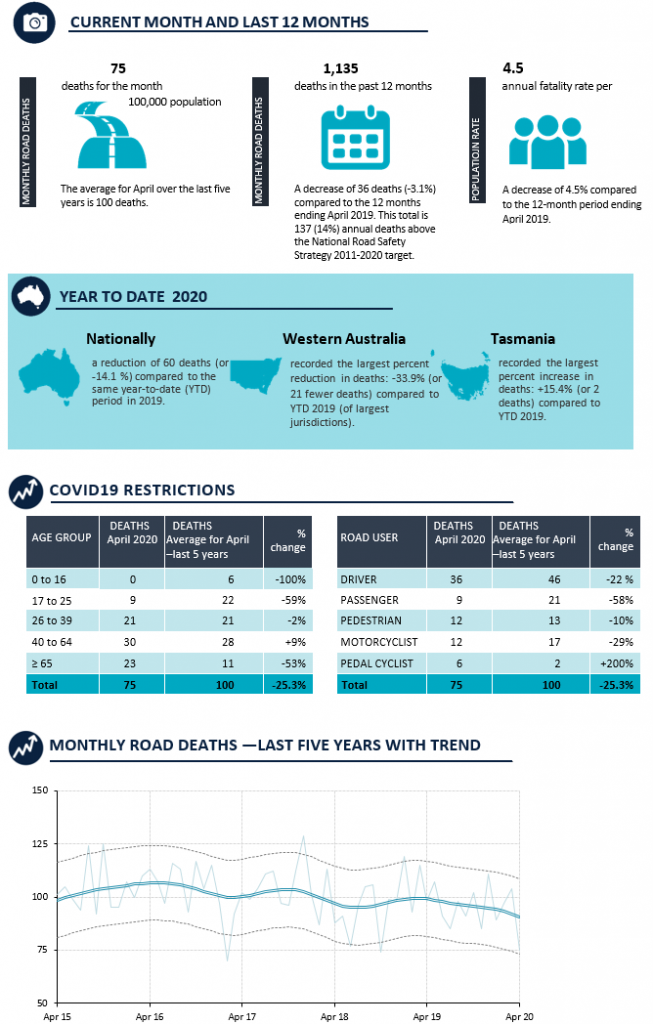
The death rate on our roads is down an average 25% because of the Covid-19 lockdowns.  The lockdowns have meant less cars on the road.  The COVID-19 pandemic has no doubt had an enormous impact, both socially and economically, on the Australian community and on the world.  It’s arguable however that there are some areas of life that the pandemic has actually improved. One area in particular is that of Transport, Traffic and the encompassing death toll from road accidents each year caused by our increasing traffic on our roads.

The death toll on our roads has been increasing with the increasing volume or vehicles on our roads over the years.  This is a crisis that we are continuing to fight everyday and the aim of the government is to aim for zero deaths on our roads.  This crisis of the road toll injuries and deaths causes suffering, loss and economic hardship to countless numbers within our communities.

Currently, due to community lock downs and restrictions caused by COVID19, the majority of us are enjoying the lack of traffic on the roads, being able to reach our destinations in good time, waiting at red lights less frequently and not being stuck in a red sea of bumper lights trying to get home from work. The air is cleaner, the petrol prices have dropped. Most importantly, there have been less accidents on the road and therefore, less deaths.

Eventually, we will return to ‘life as usual’. Traffic will increase, petrol will go up in price and if we aren’t careful, things will return to normal with the death and injury toll due to road exposure increasing. The question is, will we learn anything from our experience during COVID19?

Some lessons for consideration after COVID-19 has passed:

1. Reducing the number of vehicles on the road ultimately reduces road fatality

Whilst lockdowns have had some negative impacts, the result of them has also led to less cars on the road and therefore less people being exposed to the possibility of injury and fatality. When life returns to “normal”, our exposure to road injury and fatality increases by our accessibility to the road. This brings into focus the value of exposure reduction as a proactive intervention to road safety. Previously, we have not addressed the concept of trying to reduce the actual number of cars on the road because we focused so narrowly on the road transport system itself when discussing safety i.e increasing road rules etc.

2. Reducing exposure to the road helps our community

We have had a taste of the community benefits already. Long-term, by reducing our exposure to the roads, we could in theory have cleaner air, less green-house gas emissions, less noise, cheaper fuel prices, less air pollution, less traffic, less road works and expense to tax payer funds, greater opportunities for transport to build in our communities.

3. Reducing the number of cars on the road helps us restructure our working lives

The pandemic has forced most of us to work and study from home where possible. Ever advancing internet connections and online capabilities have made this easier than ever with online conferences, classes, video links etc making the need for “face to face” interaction less essential. For many, working from home has proven to be more effective than expected, and has provided us a way to rethink our business models and society work operations. It has now easier than ever to imagine a society where you work from home 2-3 days a week and only attend the work place for face-to-face meetings on a needs basis. That leaves us with the remaining jobs and personnel that must be on the road frequently in order to complete their work and working from home is not an option. By staying home, those of us that can work from home will provide these essential road users safer access to transport, less traffic and congested roads all by limiting unnecessary exposure to the road.

4. Reducing the number of people on the road assists Police and Law Enforcement

The main cause of road fatalities are; Speeding, Drugs and Alcohol, Fatigue, Seatbelts and Mobile phones / Distractions (Called the “Fatal 5”).  All of these five factors are easily prevented and within human control.  The human element is the problem though.  If there was a decrease in the number of vehicles on the road then in theory, Police and law enforcement would be more able to single out those acting dangerously on our roads. There would be greater capacity to conduct licence checks and more time and capability to conduct random breath testing.

5. Reducing road exposure could help support our public transport system

In Australia, we pay some of the most expensive rates for public transport than anywhere else in the world. There could be many reasons for this including our dependence on private vehicles to get us from A to B. If we were able to reduce the amount of exposure of private vehicles on the road, our public transport systems would be better supported and in turn, prices may reduce for everyone catching public transport.  

The impacts of COVID19 will not last forever however the lessons we learn from this pandemic can.  With restrictions being slowly lifted, we have a choice as to whether we are going to see a rise in the road death toll again. What we do know is that with less vehicles on the road, there are less fatalities. 

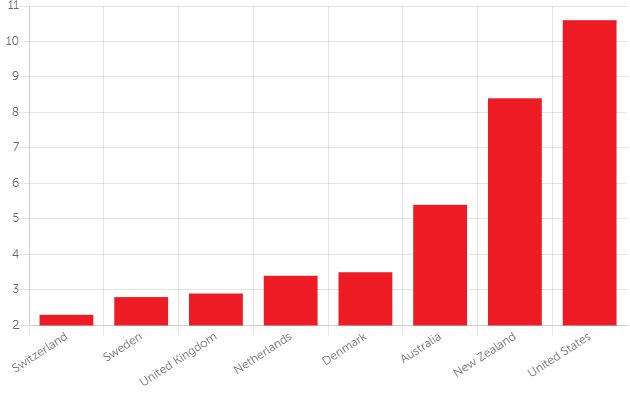
Here are some interesting charts –

Road Fatalities – Deaths per 100,000 population (Country)


\Road Fatalities
Road Fatalities 2 653x1024

Interstate NRL players who have refused to be vaccinated against the flu, have been banned from playing in Queensland- and their reaction to this announcement is a jab at our front-line workers.

Last year, Australia experienced its worst flu season on record. Some 310 000 people presented themselves to hospitals and health services nationwide. This figure is seven times greater than Australia’s previous 18-year average and our health care system is still recovering from the repercussions.

There are many factors that contributed to the seven-fold increase, however medical professionals have attributed the unusually high rate of deaths and infections due the drop in the rate of adults who line up for their annual flu shot.

Our medical professionals are already working tirelessly to stay one step ahead COVID-19. To ease the burden, our entire community has been placed under Government mandated restrictions.

So far it has been going well. Australia alongside New Zealand has been paving the way in pandemic prevention.

However, in order to prevent the second wave of the COVID-19 coinciding with the flu season, we are being asked to please line up for our flu shot. This is not an unusual request.

For years, our Government have implemented strict No Jab No Pay policies regarding our children and childcare services. Our medical professionals, front-line workers and aged care service providers are also required to be immunized for the greater good of our community.

Being young, fit and healthy our NRL players are not being asked to vaccinate for their personal benefit. They’re being asked to vaccinate for the benefit of our vulnerable, our healthcare system and our community.  

Brooke Winter Solicitors
Enquire
Brooke Winter Solicitor

"*" indicates required fields

This field is for validation purposes and should be left unchanged.
Hi Book@2x
Free Ebook

Are you new to the Criminal Justice System?

Download our free eBook to learn some fundamentals about how the system works and what to expect.

"*" indicates required fields

This field is for validation purposes and should be left unchanged.
0
years of representing clients in court

In need of representation?

Fill out this form and we’ll be in touch

"*" indicates required fields

This field is for validation purposes and should be left unchanged.
Hi 16yrs Txt Blk

Share This

Pop Log Img@2x

Select your desired option below to share a direct link to this page.
Your friends or family will thank you later.