
A recent article in the Australian titled “Murders should take truth serum to reveal victims’ bodies say leading barristers” has sparked a debate whether the use of truth serum on prisoners convicted of murder to find the location of the bodies is ethical.

Which side of the fence do you sit on?

What is Truth Serum?

Truth Serum or “Sodium Thiopental, Pentothal” is a powerful drug that has the ability the alter the mind of the person taking it to extract truthful statements from people.

The Truth Serum is administered and slows neural connections, lower inhibitions and ultimately reduces one’s capacity to lie. Truth Serum is sometime used to treat insomnia, but taking too much of this drug in a short interval can prove lethal.

Truth serum has been used as an essential tool of the Indian police throughout history, even after the High Court of India ruling stated that it was “cruel, inhuman and degrading”. Police in India administer the drug when there is an uncooperative suspect in an attempt to elicit a confession.

In the article featured in the Australia, the barrister Ms Cunneen, stated that “the use of chemicals to learn key details about convicted criminals’ offences was a great idea.”

In theory the use of truth serum could be a way to:

  • Ensure that justice is served;
  • The victims’ families have peace and know what happened to their loved ones;
  • Protect the community; and,
  • Serve as a deterrence for criminals not to commit these types of offences.

However, the use of truth serum could fundamentally breach many human rights, including the right to remain silent and the right to autonomy over one’s body. The court would have to make an order that the offender would have to take a dosage of truth serum prior to questioning in court. This creates a moral dilemma, does an offender need to give up their right to autonomy of their own bodies and right to silence to aid in the course of justice?

So, what is the alternative solution?

In, Queensland under the Corrective Services Act 2006-

193A Deciding parole applications—no body-no parole prisoner.

(1) This section applies to a no body-no parole prisoner’s application for a parole order.

(2) If a no cooperation declaration is in force for the prisoner, the board must refuse the application.

(3) If the prisoner has been given a notice under section 175Q, the board must consider the application under section 193.

(4) If subsections (2) and (3) do not apply, the parole board must defer the hearing of the application and request a commissioner’s report under section 175M (2).

The no-body parole law is the alternative solution to incite offenders to give information regarding the bodies to the police and allowing offenders to have autonomy of their own bodies, rather than administrating truth serum to offenders.

Our team specialise in criminal law. Our role is to sit down with you and work out the strategy that will get you the best possible result. If you have any questions about this article or any other topic of law, please call our team of experts on 1300 066 669.
In a step to crack down on drug driving, roadside drug testing has been expanded to allow for the detection of cocaine. The roadside saliva-based sample tests previously tested only for THC, methylamphetamine and MDMA.

If you test positive roadside for the presence of cocaine, THC, methylamphetamine and/or MDMA, the Police could charge you with one of the following offences:

  1. Driving under the Influence of Drug

Driving under the influence of a drug is treated the same as high range drink driving. However, Police do not have to prove a prescribed concentration of a drug, simply that the person is under the influence of the drug. If you are charged with Driving under the Influence of Drug, then there is a mandatory minimum disqualification of your drivers licence is 6 months for the first offence.

  1. Driving Whilst Relevant Drug Present in System

This is a slightly less serious charge. For the charge of Driving Whilst Relevant Drug Present, the police do not need to prove that the person was in any way affected by the drug, they just need to prove that the relevant drug was in their system.

If you are charged with Driving Whilst Relevant Drug Present in system, then there is a mandatory minimum disqualification of your drivers licence is 1 month for the first offence.

Our team specialise in traffic law. Our role is to sit down with you and work out the strategy that will get you the best possible result. If you have any questions about this article or any other topic of law, please call our team of experts on 1300 066 669.


This article is for general information only and should not be relied on for specific legal advice.  The author will not be held responsible for any action that a person takes as a result of interpretation of the contents of this article.  It is important to seek specific advice from a qualified and experienced lawyer for any legal problem.

What is a Riot?

It is an offence in Queensland to be involved in a riot.  A riot can be described as a violent disturbance of the peace by a crowd of people. In Queensland, that ‘crowd’ includes 12 or more people gathering together causing civil disorder and lashing out in an often spontaneous attack of violence toward other people, authorities such as police or government and/or property.

The Law:

Section 61 of the Criminal Code (Qld) 1899 states: 

(1) If— 

(a) 12 or more persons who are present together (“assembled persons” ) use or threaten to use unlawful violence to a person or property for a common purpose; and 

(b) the conduct of them taken together would cause a person in the vicinity to reasonably fear for the person’s personal safety; 

each of the assembled persons commits the crime of taking part in a riot.

Elements of the Offence:

It is the duty of the prosecutor to prove beyond a reasonable doubt that the Defendant has committed the offence. Every charge has a number of elements that the Prosecutor must prove beyond a reasonable doubt. For the charge of Riot the Prosecution must prove:

  1. Defendant – The Prosecutor has to prove the identification of the offender; 
  2. There were 12 Or More Persons Present Together;  
  3. That those persons Used Or Threatened Violence  
  4. For a Common Purpose;  

That the conduct of those persons caused or could cause Fear to Others.

Maximum Penalty for Riot

The maximum penalty for this offence is three years imprisonment. This can extend to life imprisonment depending on aggravated circumstances.   

Convictions

In Queensland, if a person is convicted of Riot, then the court could impose one of the following penalties: 

  • Jail (suspended, parole or actual time); 
  • Intensive Corrections Order; 
  • Probation; 
  • Community Service Order; 

The actual penalty will depend on the circumstances of the matter including the seriousness of the offence and the individual circumstances and background of the Defendant.

Possible Defences For a Riot

There are a number of defences available to charges at law. Not every defence is available to every charge. You will need to seek specific legal advice to see if you have a defence available to you for this charge. Some of the common defences available in criminal charges are:

  • Necessity; 
  • Mistake of Fact; 
  • Public Safety; 
  • Self Defence or defence of another person; 
  • Intoxication; 
  • Provocation; 
  • Accident; 
  • Duress; 
  • Compulsion; 
  • Insanity; 
  • Automatism

Which Court Will Your Matter be Heard in?

The charge of Riot (simpliciter) will be heard in the Magistrates Court in Queensland.  The charge will be heard and determined by a Magistrate alone whether you plead guilty or not guilty.  There is no jury in the Magistrates Court.   

What Should I do if the Police Want to Speak to me About a Riot Allegation or if I’m Charged?

You have the right to remain silent. You DO have to provide police with your name, date of birth and contact details. You should NOT answer any questions, make any statement or participate in any interview with the police. You should be polite to the officer but insist that you want to talk to your lawyer. You have the right to telephone a friend, relative or lawyer.

Contact our criminal offence lawyers

If you are charged with a criminal offence, it is very important that you seek immediate legal advice. Our team at Brooke Winter Solicitors can give you over the phone advice. We have a solid reputation as expert Criminal Lawyers and can represent you in court. Call us on 1300 066 669 if you have any questions. We can assist you no matter where you are located and can appear in every court.

This article is for general information only and should not be relied on for specific legal advice.  The author will not be held responsible for any action that a person takes as a result of interpretation of the contents of this article.  It is important to seek specific advice from a qualified and experienced lawyer for any legal problem.

Probation is a sentencing option that the court has that is used as an alternative to, or in conjunction with a jail sentence.  Probation is typically used when the Defendant has a particular need for supervision or ongoing support and guidance in the community (for example a drug addiction) and would benefit from supervised rehabilitation whilst in the community.

A period of probation can be ordered anywhere between 6 months and 3 years.

The court will impose a period of probation typically when an element of supervision is required for the defendant.

If you are sentenced to a period of probation the Court can still exercise their discretion under section 12 of the Penalties and Sentences Act 1992 on whether or not to record a conviction against you if you are sentenced solely to a probation order.

What a Probation Order Entails

Probation is intensive supervision by the probation and parole office and will require constant contact with the allocated supervising officer. A person on probation must report to the nearest probation and parole office usually within 48 hours of the time of sentence. It is recommended that you go and report to that office immediately after court.

If you sentenced to a Probation Order you will have the following standard conditions that you must comply with:

  • You must report to nearest The Office of Probation and Parole within 48 hours;
  • You must not commit another offence during the period of the Probation Order;
  • You must notify the Office of Probation and Parole of a change of address within 48 hours;
  • You must not leave the State of Queensland without permission from the Office of Probation and Parole;
  • You must comply with every reasonable direction of the Office of Probation and Parole; and
  • You must comply with every direction to undertake counselling as directed by the Office of Probation and Parole.

The standard conditions that are included on a probation order mean that you may have to complete courses or programs at the direction of your probation officer. If there is a cost associated with these courses or programs, you will be expected to attend to the payment required.

The Court has the power under section 94 of the Penalties and Sentences Act 1992, to consider imposing further conditions on the Probation Order that a defendant is sentenced to. These conditions can include:

  • Getting assessed for any medical, psychiatric or psychological issues and then completing any treatment as directed by your probation officer;
  • Complying with any Urine or Breath testing at the direction of the Office of Probation and Parole;
  • If the offence is a domestic violence offence, the court will impose a condition that you undergo a domestic violence course during the period of the probation order;
  • And any other specific requirements the Court deems the Defendant should address to assist in their rehabilitation.

If you breach probation in any way, then it is likely that you will be summonsed to go back to court. In that event, your probation order could be revoked, and you could be resentenced in relation to the original offences (this could include a harsher sentence).

The Court cannot sentence you to a period of Probation unless you are willing to consent to the Probation Order and the conditions that you will be subject to.

The Court will read through the conditions that you are being sentenced to and ask you to confirm if you will consent to the Probation Order. If you do not consent to the Probation Order, then the Court will have to consider alternative sentencing options for your matter.

List of Probation and Parole Offices in Queensland

Beenleigh, Brisbane (Spring Hill / Chermside / Buranda), Bundaberg, Burleigh Heads, Caboolture, Cairns, Cleveland, Emerald, Gladstone, Gympie, Harvey Bay, Inala, Innisfail, Ipswich, Kingaroy, Logan City, Mackay, Mareeba, Maroochydore, Mt Gravatt, Mt Isa, Noosa Heads, Pine Rivers, Redcliffe, Rockhampton, Toowoomba, Roma, Southport, Thuringowa, Thursday Island, Townsville and Wynnum.

What Happens If I Do Not Comply With My Probation Order?

If you fail to comply with your Probation Order while it is in place, then you will face a further offence of Breach of Probation Order. This means that your matter will be sent back before the Court with a breach pack that is prepared by Probation and Parole.

A breach offence occurs when:

  • You have committed another offence during your probation order period; or
  • You have failed to comply with the conditions of your probation order or to complete your probation order.

If you have breached your Probation Order than Probation and Parole can seek that your Probation Order be revoked and you be resentenced for the offences that you received Probation for. If the breach is proven then you can face a fine for breaching your probation order.

They can also recommend if you are still suitable for further community-based orders such as Community Service Orders or Intensive Corrective Orders. If you are not suitable for further community-based orders you run the risk of the Court considering a period of imprisonment in relation to your offending.

Courts have zero tolerance for breaches of probation and will impose strict penalties. The penalties of the breach vary depending on the severity of the misconduct and the nature of the offence.

Our team specialise in criminal defence. Our role is to sit down with you and work out the strategy that will get you the best possible result. If you have any questions about this article or any other topic of law, please call our team of experts on 1300 066 669.

This article is for general information only and should not be relied on for specific legal advice.  The author will not be held responsible for any action that a person takes as a result of interpretation of the contents of this article.  It is important to seek specific advice from a qualified and experienced lawyer for any legal problem.   

What is Unlawful Taking of Shop Goods (UTAG)?

This offence in Queensland is otherwise known as ‘shoplifting.’ A person can be charged with the offence of Unlawful Taking of Shop Goods when they consume or take, alter or remove or otherwise make the shop tag indistinguishable of an item that they have not paid for.

It is essentially stealing however, if the value of the item is under $150.00, the police can opt for this offence instead. Although this offence is not as serious as stealing, it is still considered to be an offence of dishonesty and can result in criminal convictions on one’s history. Common examples of this offence include eating a packet of chips inside the grocery store without paying for them first or removing the tags from a hat before placing it on your head and attempting to walk out of the store without paying.

Laws of Unlawful Taking of Shop Goods

Section 5 of the Regulatory Offences Act (Qld) states;

1) Any person who, with respect to goods in a shop of a value of $150 or less—

(a) consumes them without the consent, express or implied, of the person in lawful possession of them; or

(b) deliberately alters, removes, defaces or otherwise renders indistinguishable a price shown on them, without the consent, express or implied, of the person in lawful possession of them; or

(c) whether or not the property in the goods has passed to the person, takes them away without discharging, or attempting honestly, or making proper arrangements, to discharge his or her lawful indebtedness therefor;

is guilty of a regulatory offence and, subject to section 9, is liable to a fine of 6 penalty units.

(1A) Without limiting subsection (1) (b) , a price may be shown on goods by a bar code or a similar device.

(2) It is a defence to a charge of an offence defined in subsection (1) (c) to prove the taking away of the goods was not dishonest. 

“advantage” includes benefit.

Elements of the Offence

It is the duty of the prosecutor to prove beyond a reasonable doubt that the Defendant has committed the offence.  Every charge has a number of elements that the Prosecutor must prove beyond a reasonable doubt.  For the charge of UTAG the Prosecution must prove;

  1. Defendant – The Prosecutor has to prove the identification of the offender;
  2. Took or Consumed; OR

            altered, removed or rendered a price tag indistinguishable; 

  1. Goods of Another;
  2. Without Consent;
  3. The value of the goods was $150.00 or less.

Maximum Penalty for Unlawful Taking of Shop Goods

The maximum penalty for this offence is 6 penalty units.

Convictions

In Queensland, if a person is convicted of Unlawful Taking of Shop Goods, then the court could impose one of the following penalties:

  • Jail (suspended, parole or actual time);
  • Intensive Corrections Order;
  • Probation;
  • Community Service Order;
  • Fines.

The actual penalty will depend on the circumstances of the matter including the seriousness of the offence and the individual circumstances and background of the Defendant.

Possible Defences

There are a number of defences available to charges at law.  Not every defence is available to every charge.  You will need to seek specific legal advice to see if you have a defence available to you for this charge.  Some of the common defences available in criminal charges are;

  • Necessity;
  • Mistake of Fact;
  • Public Safety;
  • Self Defence or defence of another person;
  • Intoxication;
  • Provocation;
  • Accident;
  • Duress;
  • Compulsion;
  • Insanity;
  • Automatism

Which Court will your matter be heard in?

The charge Unlawful Taking of Shop Goods will be heard in the Magistrates Court in Queensland.  The charge will be heard and determined by a Magistrate alone whether you plead guilty or not guilty.  There is no jury in the Magistrates Court.

What should I do if the police want to speak to me about an Unlawful Taking of Shop Goods allegation or if I am charged with Unlawful Taking of Shop Goods?

You have the right to remain silent. You DO have to provide police with your name, date of birth and contact details. You should NOT answer any questions, make any statement or participate in any interview with the police. You should be polite to the officer but insist that you want to talk to your lawyer. You have the right to telephone a friend, relative or lawyer.

Call an Expert

If you are charged with a criminal offence, it is very important that you seek immediate legal advice. Our team at Brooke Winter Solicitors can give you over-the-phone advice. We have a solid reputation as expert Criminal Lawyers and can represent you in court. 

Contact us or call us on 1300 066 669 if you have any questions. We can assist you no matter where you are located and can appear in every court.

This article is for general information only and should not be relied on for specific legal advice.  The author will not be held responsible for any action that a person takes as a result of interpretation of the contents of this article.  It is important to seek specific advice from a qualified and experienced lawyer for any legal problem.   

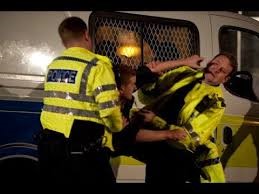
Assault Police

What is Assault Police?

In Queensland it is an offence to Assault a police officer when they are performing their official duties. A person who strikes, touches, moves or applies force to a police officer (either directly or indirectly) can be charged with Assaulting a police officer.   

An assault is defined in section 245 of the Criminal Code Queensland as; 

“A person who strikes, touches, or moves, or otherwise applies force of any kind to, the person of another, either directly or indirectly, without the other person’s consent, or with the other person’s consent if the consent is obtained by fraud, or who by any bodily act or gesture attempts or threatens to apply force of any kind to the person of another without the other person’s consent, under such circumstances that the person making the attempt or threat has actually or apparently a present ability to effect the person’s purpose, is said to assault that other person, and the act is called an “assault”

In this section—

“applies force” includes the case of applying heat, light, electrical force, gas, odour, or any other substance or thing whatever if applied in such a degree as to cause injury or personal discomfort. 

The Law: 

Section 790 of the Police Powers and Responsibilities Act (PPRA) states; 

(1) A person must not assault or obstruct a police officer in the performance of the officer’s duties. 

Penalty: Maximum penalty— 

(a) if the assault or obstruction happens within licensed premises, or in the vicinity of licensed premises—60 penalty units or 12 months imprisonment; or 

(b) otherwise—40 penalty units or 6 months imprisonment. 

(2) For subsection (1) , a person who obstructs a police dog or police horse under the control of a police officer in the performance of the police officer’s duties is taken to obstruct the police officer. 

Elements of the Offence:

It is the duty of the prosecutor to prove beyond a reasonable doubt that the Defendant has committed the offence.  Every charge has a number of elements that the Prosecutor must prove beyond a reasonable doubt.  For the charge of Assault Police the Prosecution must prove; 

1.Defendant – The Prosecutor has to prove the identification of the offender; 

2.Did Assault – The Prosecutor has to prove that an “assault” as defined at law has  occurred.  3.

Another Person – There needs to be a victim of the crime;  

3.A Police Officer; 

4.In the execution of their lawful duties; 

5.Without Permission – That the Defendant had no excuse for doing this (ie/ was not authorised / justified or otherwise excused at law)

Penalty for Common Assault:

The maximum penalty that a person can receive for the offence of Assaulting a Police officer is

If within a licenced premises

$8007.00 and / or 12 months jail

Otherwise

$5338.00 and / or 6 months jail

Convictions:

In Queensland, if a person is convicted of a Assault Police offence, then the court could impose one of the following penalties:

  • Jail (suspended, parole or actual time);
  • Intensive Corrections Order;
  • Probation;
  • Community Service Order;
    Fines.

The actual penalty will depend on the circumstances of the matter including the seriousness of the offence and the individual circumstances and background of the Defendant.

Possible Defences

There are a number of defences available to charges at law.  Not every defence is available to every charge.  You will need to seek specific legal advice to see if you have a defence available to you for this charge.  Some of the common defences available in criminal charges are;

  • Necessity;
  • Mistake of Fact;
  • Public Safety;
  • Self Defence or defence of another person;
  • Intoxication;
  • Provocation;
  • Accident;
  • Duress;
  • Compulsion;
  • Insanity;
  • Automatism

Which Court will your matter be heard in?

The charge of Assault Police will be heard in the Magistrates Court in Queensland.  The charge will be heard and determined by a Magistrate alone whether you plead guilty or not guilty.  There is no jury in the Magistrates Court.  

What should I do if the police want to speak to me about an Assault Police allegation or if I am charged with Assaulting a Police Officer?

You have the right to remain silent. You DO have to provide police with your name, date of birth and contact details. You should NOT answer any questions, make any statement or participate in any interview with the police. You should be polite to the officer but insist that you want to talk to your lawyer. You have the right to telephone a friend, relative or lawyer. 

Call an Expert

If you are charged with a criminal offence, it is very important that you seek immediate legal advice. Our team at Brooke Winter Solicitors can give you over the phone advice. We have a solid reputation as expert Criminal Lawyers and can represent you in court. Call us on 1300 066 669 if you have any questions. We can assist you no matter where you are located and can appear in every court.

Did you know, that under section 83 of the Transport Operations (Road Use Management) Act in Queensland, that any person driving a motor vehicle on a road without due care and attention or without reasonable consideration for other persons using the road or place is guilty of an offence? It does not matter whether or not you had an accident.

Examples of driving without due care and attention

These include (but are not limited to):

  • Eating while driving;
  • Applying makeup while driving;
  • Changing lanes without looking;
  • Running a red light to stop sign;
  • “Brake checking” another car.

The penalty for driving without due care and attention

There is no maximum for the offence varies.

If the person causes the death of or grievous bodily harm to another person and was an unlicensed driver at the time of committing the offence- 2 years imprisonment is the maximum penalty.

If the person causes the death of or grievous bodily harm to another person but was licenced, then the maximum penalty is 1 year imprisonment.

If these aggravating features are absent, the maximum penalty is 6 months imprisonment.

The matter will go before a Magistrates Court. At Court, you are asked if you are pleading guilty or not guilty. If you elect to plead guilty, it means you accept you did drive without due care and attention and the prosecutor will tell the magistrate what occurred, hand up any traffic or criminal history you may have. You will then be given the opportunity to explain to the Magistrate what occurred, what your situation is and why your licence should or should not be disqualified.

A Magistrate will then impose a penalty they view as just and reasonable in all the circumstances.

There is no mandatory minimum period of disqualification for this offence, however the Magistrate can disqualify you from driving for a period of 1 month to an absolute disqualification, depending upon the circumstances of the case.

If disqualified, you cannot apply for a work licence or hardship licence.  Therefore, if holding a licence is a vital element of your job, then the circumstances of same, must be put to the Court at the time of sentence, and in such a way that the court does not impose any disqualification period.

Our team specialise in traffic law. Our role is to sit down with you and work out the strategy that will get you the best possible result. If you have any questions about this article or any other topic of law, please call our team of experts on 1300 066 669.

This article is for general information only and should not be relied on for specific legal advice.  The author will not be held responsible for any action that a person takes as a result of interpretation of the contents of this article.  It is important to seek specific advice from a qualified and experienced lawyer for any legal problem.   

What is Drink Spiking?

In Queensland, it is an offence to administer or attempt to administer a substance to another person with intent to cause the other person to be stupefied or overpowered, which is referred to as Drink Spiking.  The term ‘stupefied or overpowered’ includes a state of intoxication caused by alcohol, drug or another substance, and a behavioural change caused by a dangerous drug whether or not the mind is otherwise affected. 

It is irrelevant the quantity or nature of the substance administered to the drink.  Further, it is irrelevant if the person intended to take the drink actually takes the drink or another person does.  

The Drink Spiking Law:

Section 316A of the Criminal Code (Qld) 1899 states; 

(1) A person who administers, or attempts to administer, in drinka substance to another person (the “other person” ) without the other person having knowledge of the substance with intent to cause the other person to be stupefied or overpowered is guilty of a crime and is liable to imprisonment for 5 years. 

(2) If the substance is alcohol, for section 24 only, the circumstances in which the other person is taken to have knowledge of the alcohol include where the other person would not object to the administration of the alcohol if the other person had actual knowledge of it. 

(3) The following matters are immaterial—         

(a) whether the lack of knowledge of the substance is lack of knowledge of the presence at all of the substance or of the particular quantity of the substance; 

(b) whether the substance is capable of having the effect intended; 

(c) whether a particular person is intended to be the person to whom the substance is administered or attempted to be administered.  

Elements of the Drink Spiking Offence:

It is the duty of the prosecutor to prove beyond a reasonable doubt that the Defendant has committed the Drink Spiking offence.  Every charge has a number of elements that the Prosecutor must prove beyond a reasonable doubt.  For the charge of Drink Spiking the Prosecution must prove; 

  1. Defendant – The Prosecutor has to prove the identification of the offender; 
  2. Administers or attempts to administer; 
  3. In a Drink
  4. A Substance to another person; 
  5. Without Consent – Without the other person having knowledge of the substance; 
  6. Intent – With intent to cause the other person to be stupefied or overpowered 

Maximum Penalty for Drink Spiking:

The maximum penalty for drink spiking is 5 years.

Convictions:

In Queensland, if a person is convicted of Drink Spiking, then the court could impose one of the following penalties:

  • Jail (suspended, parole or actual time);
  • Intensive Corrections Order;
  • Probation;
  • Community Service Order;
  • Fines.

The actual penalty will depend on the circumstances of the matter including the seriousness of the offence and the individual circumstances and background of the Defendant.

Possible Defences:

There are a number of defences available to charges at law.  Not every defence is available to every charge.  You will need to seek specific legal advice to see if you have a defence available to you for this charge.  Some of the common defences available in criminal charges are;

  • Necessity;
  • Mistake of Fact;
  • Self Defence or defence of another person;
  • Intoxication;
  • Provocation;
  • Accident;
  • Duress;
  • Compulsion;
  • Insanity;
  • Automatism

Which Court will your matter be heard in?

The charge Drink Spiking will ordinarily be heard in the Magistrates Court in Queensland.  The charge will be heard and determined by a Magistrate alone whether you plead guilty or not guilty.  There is no jury in the Magistrates Court. 

The Defendant may however elect to have the matter heard in the District Court.    

What should I do if the police want to speak to me about a Drink Spiking allegation or if I am charged with Drink Spiking?

You have the right to remain silent. You DO have to provide police with your name, date of birth and contact details. You should NOT answer any questions, make any statement or participate in any interview with the police. You should be polite to the officer but insist that you want to talk to your lawyer. You have the right to telephone a friend, relative or lawyer.  

Call an Expert 

If you are charged with a criminal offence, it is very important that you seek immediate legal advice. Our team at Brooke Winter Solicitors can give you over the phone advice. We have a solid reputation as expert Criminal Lawyers and can represent you in court. Call us at 1300 066 669, or contact us online if you have any questions. We can assist you no matter where you are located and can appear in every court. 

This article is for general information only and should not be relied on for specific legal advice. The author will not be held responsible for any action that a person takes as a result of interpretation of the contents of this article.  It is important to seek specific advice from a qualified and experienced lawyer for any legal problem.

Arson is a serious offence and is the act of intentionally destroying or damaging property through the use of fire.  It is also deliberately committing an act that, at the time, you were aware the property catching fire was a likely consequence and did so regardless of the risk.  Property includes a building or structure, motor vehicle train, aircraft or vessel, any stack of cultivated vegetable produce, or of mineral or vegetable fuel, a mine, or the workings, fittings, or appliances of a mine.

The Law:-

Section 461 of the Criminal Code (Qld) 1899 states;

(1) Any person who wilfully and unlawfully sets fire to any of the things following, that is to say—

(a) a building or structure;

(b) a motor vehicle, train, aircraft or vessel;

(c) any stack of cultivated vegetable produce, or of mineral or vegetable fuel;

(d) a mine, or the workings, fittings, or appliances of a mine;

is guilty of a crime, and is liable to imprisonment for life.

Elements of the Offence:

It is the duty of the prosecutor to prove beyond a reasonable doubt that the Defendant has committed the offence.  Every charge has a number of elements that the Prosecutor must prove beyond a reasonable doubt.  For the charge of Arson the Prosecution must prove;

  1. Defendant– The Prosecutor has to prove the identification of the offender;
  2. Fire– There needs to be an actual fire, scorching or charring is not sufficient.
  3. Wilfully– Actual intention to set fire, or deliberately did an act aware at the time that catching fire was a likely consequence and did so regardless of the risk;
  4. Unlawfully– Without the owner’s consent, unless justified or excused by law.

Maximum Penalty for Arson

The maximum penalty is life imprisonment.

Convictions:-

In Queensland, if a person is convicted of Arson, then the court could impose one of the following penalties:

  • Jail (suspended, parole or actual time);
  • Intensive Corrections Order;
  • Probation;
  • Community Service Order;
  • Fines.

The actual penalty will depend on the circumstances of the matter including the seriousness of the offence and the individual circumstances and background of the Defendant.

Possible Defences for Arson

There are a number of defences available to charges at law.  Not every defence is available to every charge.  You will need to seek specific legal advice to see if you have a defence available to you for this charge.  Some of the common defences available in criminal charges are;

  • Intention;
  • Accident;
  • Necessity;
  • Intoxication
  • Identity;
  • Insanity;
  • Mental Impairment.

Which Court will your matter be heard in?

The matter is strictly indictable.

In that event a committal hearing will have to be conducted and then the matter will proceed to the District Court.  If you enter a plea of guilty then the charge will be determined by a Judge.  If you enter a plea of Not Guilty then the trial will be before a Judge and Jury.  If you are found guilty then you will be sentenced by the Judge.

What should I do if the police want to speak to me about an Arson allegation or if I am charged with Arson?

You have the right to remain silent. You DO have to provide police with your name, date of birth and contact details. You should NOT answer any questions, make any statement or participate in any interview with the police. You should be polite to the officer but insist that you want to talk to your lawyer. You have the right to telephone a friend, relative or lawyer.

Call an Expert

If you are charged with a criminal offence, it is very important that you seek immediate legal advice. Our team at Brooke Winter Solicitors can give you over the phone advice. We have a solid reputation as expert Criminal Lawyers and can represent you in court. Call us on 1300 066 669 if you have any questions. We can assist you no matter where you are located and can appear in every court.

As their initial announcement for National Road Safety Week, the Queensland State Government has announced that they will be furthering their Hold the Red radars by expanding to an additional fifteen intersections across Queensland.

In 2018 the Hold the Red Trial commenced and saw four intersections, two in Brisbane and two on the Gold Coast, have the new radars introduced.

The systems use a radar to detect cars looking likely to attempt to run a red light. Where a danger is identified by the radar the opposing traffic lights will hold on red lights to prevent the opposing traffic from entering the intersection and therefore preventing T-bone collisions. The system is designed to hold the opposing lights for two seconds.

Whilst lowering the risk of crashes at the sites motorists caught by the radar will also face penalties by infringement notices for the offence, and face a speeding fine if they are caught speeding to beat the light change.

The Government intends to have the radar installed at the further fifteen intersections by mid-2024 and have indicated that the chosen intersections have been selected due to having high records of motorists running red lights.

Queensland’s road death toll is already sitting at over 80 fatalities this year alone and the intention is for the radar to assist road safety in high crash intersections.

Our team specialise in criminal defence. Our role is to sit down with you and work out the strategy that will get you the best possible result. If you have any questions about this article or any other topic of law, please call our team of experts on 1300 066 669.

Brooke Winter Solicitors
Enquire
Brooke Winter Solicitor

"*" indicates required fields

This field is for validation purposes and should be left unchanged.
Hi Book@2x
Free Ebook

Are you new to the Criminal Justice System?

Download our free eBook to learn some fundamentals about how the system works and what to expect.

"*" indicates required fields

This field is for validation purposes and should be left unchanged.
0
years of representing clients in court

In need of representation?

Fill out this form and we’ll be in touch

"*" indicates required fields

This field is for validation purposes and should be left unchanged.
Hi 16yrs Txt Blk

Share This

Pop Log Img@2x

Select your desired option below to share a direct link to this page.
Your friends or family will thank you later.